
Learning Lab
The Learning Lab is the Flourish Project’s collaborative portal for schools and educators exploring education as a living system.

About this Lab:
What might education become if flourishing were not another programme to add to educational life, but an organising principle for the whole educational ecosystem?
The Flourish Learning Lab is a new collaborative space for exploring this question.
Across education, remarkable work is already happening around wellbeing, belonging, values, sustainability, student voice, character, creativity, nature connection, meaning and purpose.
Yet these are often approached as separate concerns.
The Learning Lab asks what becomes possible when we begin to see the relationships between them and the wider conditions that enable children, educators, communities and the living world to flourish together.
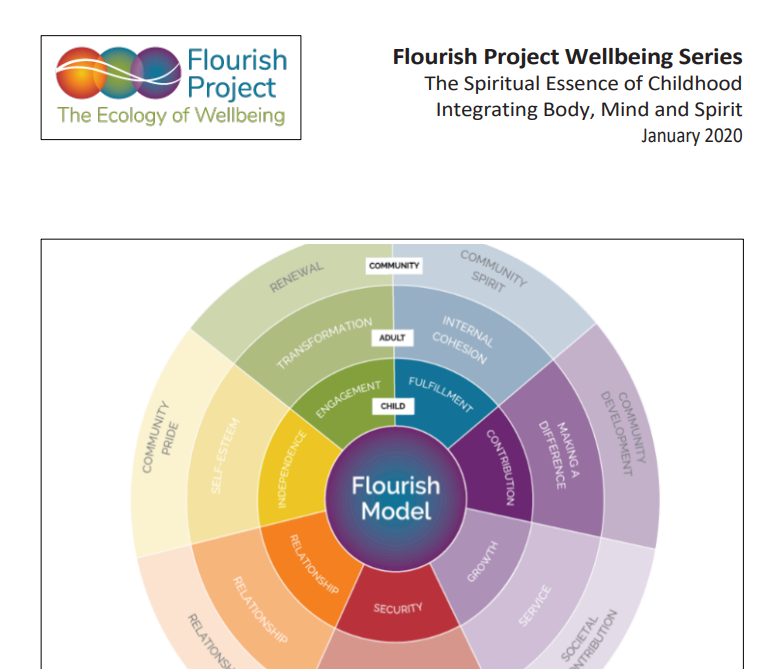
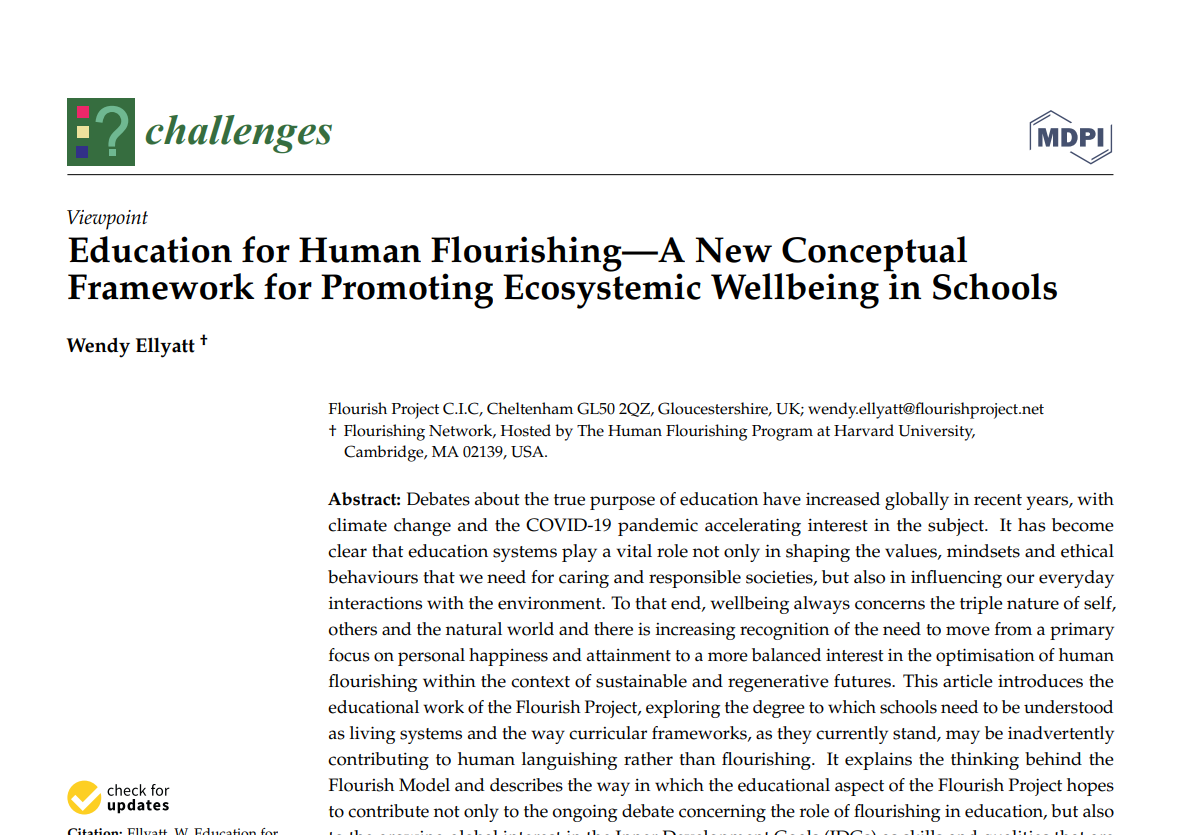
Grounded in the Flourish Project’s Ecosystemic Flourishing (ESF) Framework, the Lab brings an ecosystemic lens to education while remaining open to learning from educational practice, research, different cultures and other ways of understanding human flourishing.
We are not developing a blueprint for the perfect school.
We are creating a place to inquire together.
A different starting point
Rather than beginning with a programme or predetermined solution, we begin with questions.
· What enables children to experience safety, belonging, agency, meaning and possibility?
· What enables educators to remain curious, purposeful and alive in their work?
· How do culture, relationships, leadership and the organisation of school life shape flourishing?
· What happens when nature and ecological belonging become part of how we understand education?
· How might we recognise flourishing without turning it into another set of performance indicators?
· How might education help young people become not simply prepared for the future, but able to participate wisely in shaping it?
We do not expect any one organisation, discipline or tradition to hold the answers.
The Learning Lab exists to bring different forms of knowledge into relationship.
How we will work
Our approach is based on a simple cycle of collaborative inquiry:
Listen & Notice
Begin with lived experience. What is already happening? What is working? Where are the tensions? What are children, educators and communities telling us?
Make Connections
Look beyond individual issues to the relationships, cultures and wider systems shaping what we see.
Explore & Experiment
Bring different perspectives together and explore small, meaningful possibilities in practice.
Learn & Evolve
Use research, reflection and ;ived experience to understand what changes, what does not and what we are learning.
Share & Reconnect
Where appropriate, bring that learning into the wider Flourish Commons so that it can encounter knowledge and experience from other contexts — and stimulate the next cycle of inquiry.
Listen & Notice →Make Connections → Explore & Experiment → Learn & Evolve → Share & Reconnect ↻
_______________________________________________________________________________
Building the Learning Lab together
The Learning Lab is newly established.
At this founding stage, we are intentionally starting small.
Rather than launching a large programme, we are seeking a small number of key collaborative partners with complementary knowledge, experience and relationships who can help us explore what the Learning Lab could become.
These might include educational organisations and school networks, universities and researchers, organisations working in human development and wellbeing, ecological and regenerative education, values and the inner life, and partners bringing different cultural and international perspectives.
Schools and educational communities will be essential participants in this work, helping ensure that inquiry remains grounded in the realities of educational life.
Our intention is not to ask partners or schools to implement a finished Flourish model.
Instead, we want to learn and grow with you.
What might collaboration make possible?
By bringing different perspectives into relationship, we hope to develop:
Deeper understanding
Exploring the underlying conditions shaping flourishing rather than responding only to individual symptoms.
Greater coherence
Connecting areas of educational life that are often addressed through separate programmes and initiatives.
Research grounded in lived experience
Bringing academic inquiry into relationship with practitioner knowledge and the perspectives of children and young people.
New possibilities for practice
Creating and testing ideas in real educational contexts before assuming that they should be scaled.
Learning across contexts
Exploring what different schools, communities, cultures and educational traditions can learn from one another.
A growing educational Commons
Sharing emerging knowledge, questions, practices and resources so that learningcan travel beyond individual projects.
What Flourish brings
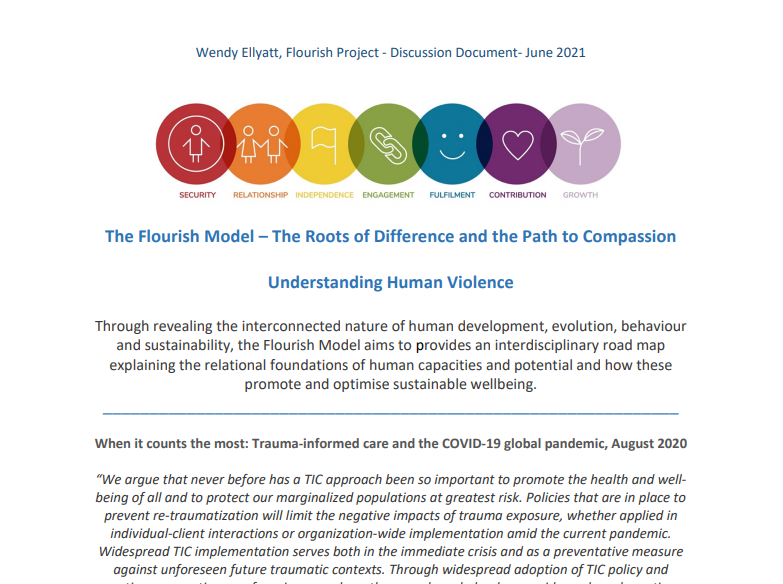
The ESF Framework gives us a way of seeing relationships that can otherwise remain invisible - between human development and the wider environment, between individual experience and organisational culture, and between the flourishing of people and the health of the systems in which they live and learn.
But ESF is not presented as a finished educational model.
The Learning Lab is also a place in which the framework itself can be tested, challenged and developed through encounter with practice, research and different ways of knowing.
Flourish brings the integrating framework, an ecosystemic perspective, relationships across different fields, and a commitment tocreating spaces in which knowledge can meet.
It also offers its partners the opportunity to become active participants in a leading global conversation about human flourishing andeducation’s role within the wider ecosystem.
Join the founding conversation
We are currently interested in hearing from a small number of organisations and individuals who are exploring similar questions and might bring complementary knowledge, experience, research capacity, educational relationships or resources.
We are particularly interested in conversations with:
educational organisations and school networks • researchers and universities • organisations working in human development and wellbeing •ecological and regenerative educators • organisations exploring values, meaning and the inner life • international and culturally diverse educational communities • foundations and other enabling partners
There is no predetermined partnership model.
The first conversation is simply an opportunity to understand what you are already doing, what the Learning Lab might contribute, and how we could find ways to collaborate.
What are you exploring?
What are we exploring?
And what might become possible if we explored some of it together?
Talk to us
Bring a question. Let’s see where it leads.
_______________________________________________________________________________________
The Learning Lab is currently under active development.
If you would like to explore how you could get involved, we invite you to share your details below.
Thank you for your submission!



Join our newsletter to stay up to date on features and releases
By subscribing you agree to our Privacy Policy