
Introducing the Eco-Systemic Flourishing (ESF) Framework
The Eco-Systemic Flourishing (ESF) Framework is a new way of understanding what helps people, communities, and the planet to thrive. It recognises that wellbeing is never an isolated achievement but something that emerges from the relationships that connect individuals, culture, economy, and the natural world. ESF highlights that many of today’s challenges - climate breakdown, social fragmentation, and declining trust—stem from deeper systemic imbalances and from development models that do not reflect what truly matters to people across generations.
ESF offers a simple, integrated structure for thinking and acting differently. It brings together four interconnected domains that shape every community and organisation:

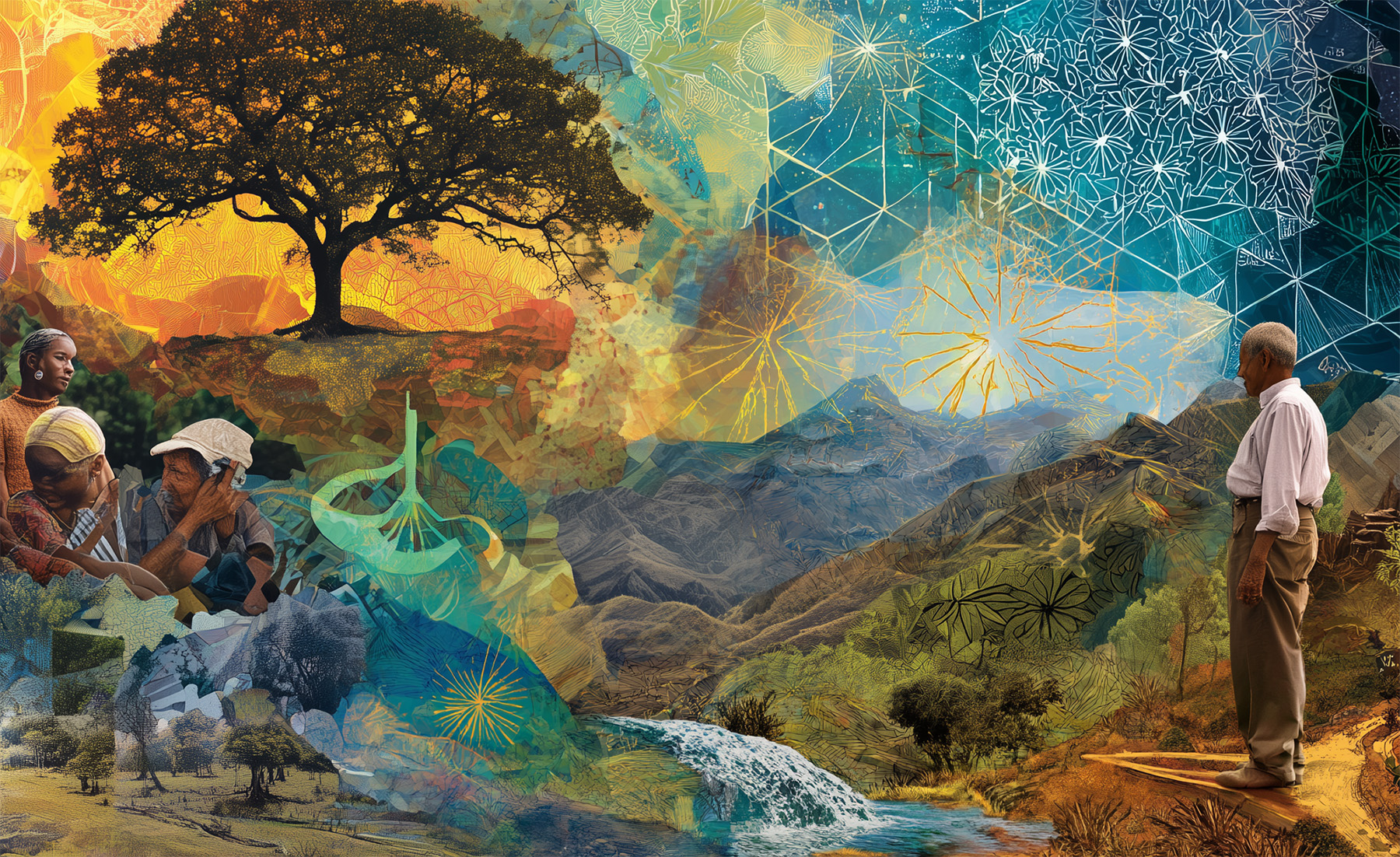
Natural Environment
The ecological systems that sustain life and anchor our sense of place and responsibility.
Natural Environment
This domain explores how well people and places live in balance with the ecosystems that support life. It includes care for land, water, air, biodiversity, and local habitats, as well as fostering awareness of interdependence and regeneration.
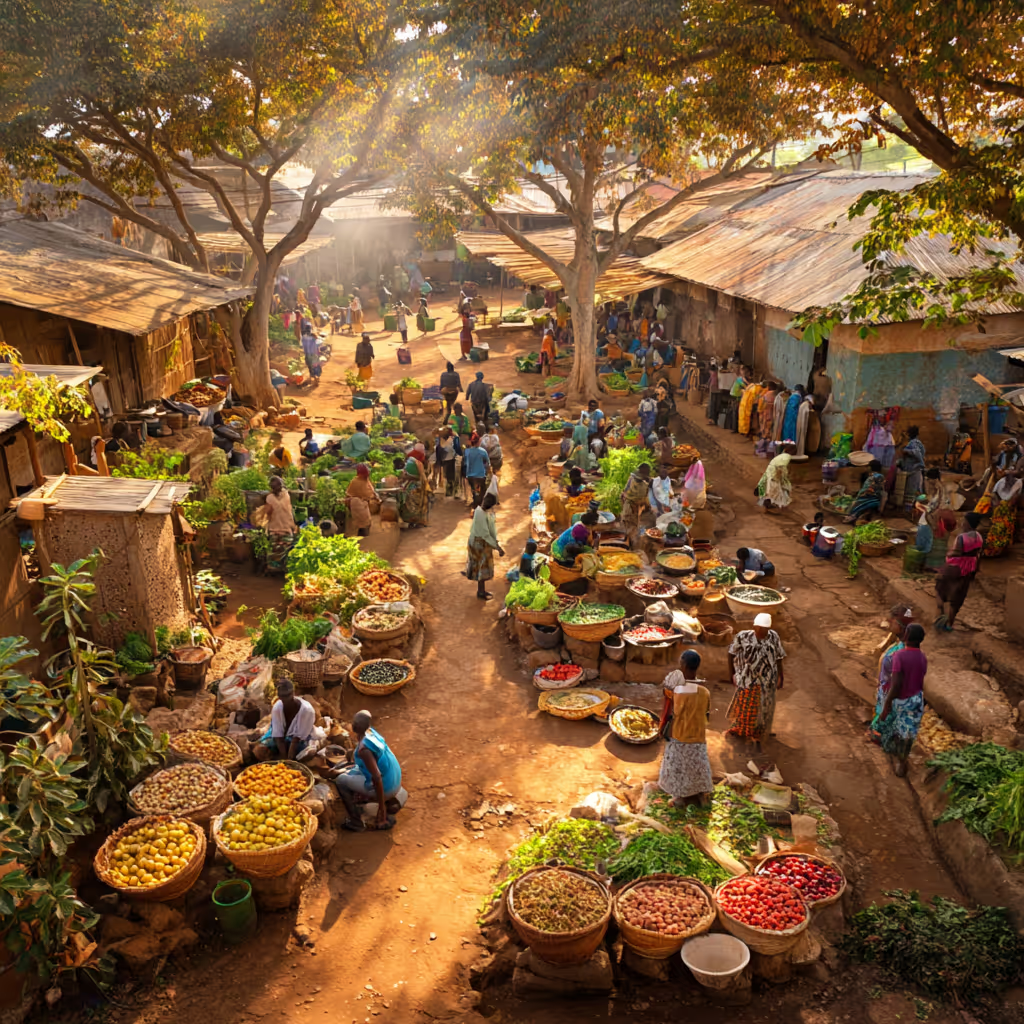
Circular & Regenerative Economics
The material conditions that support livelihoods while restoring rather than depleting the natural world.
Circular & Regenerative Economics
This domain looks at whether economic activity strengthens community wellbeing, reduces waste, and supports long-term resilience. It includes local livelihoods, resource circularity, sustainable industries, and economic designs that prioritise the common good. Flourishing economies give back more than they take

Cultural Values & Identity
The stories, norms, and meaning systems that help communities foster trust, belonging, and shared purpose.
Cultural Values & Identity
This domain focuses on the stories, values, traditions, languages, and shared meanings that help people belong. It includes social trust, diversity, heritage, ethical life, and the ways communities make sense of the world together. Flourishing cultures nurture connection, dignity, and a shared moral horizon.
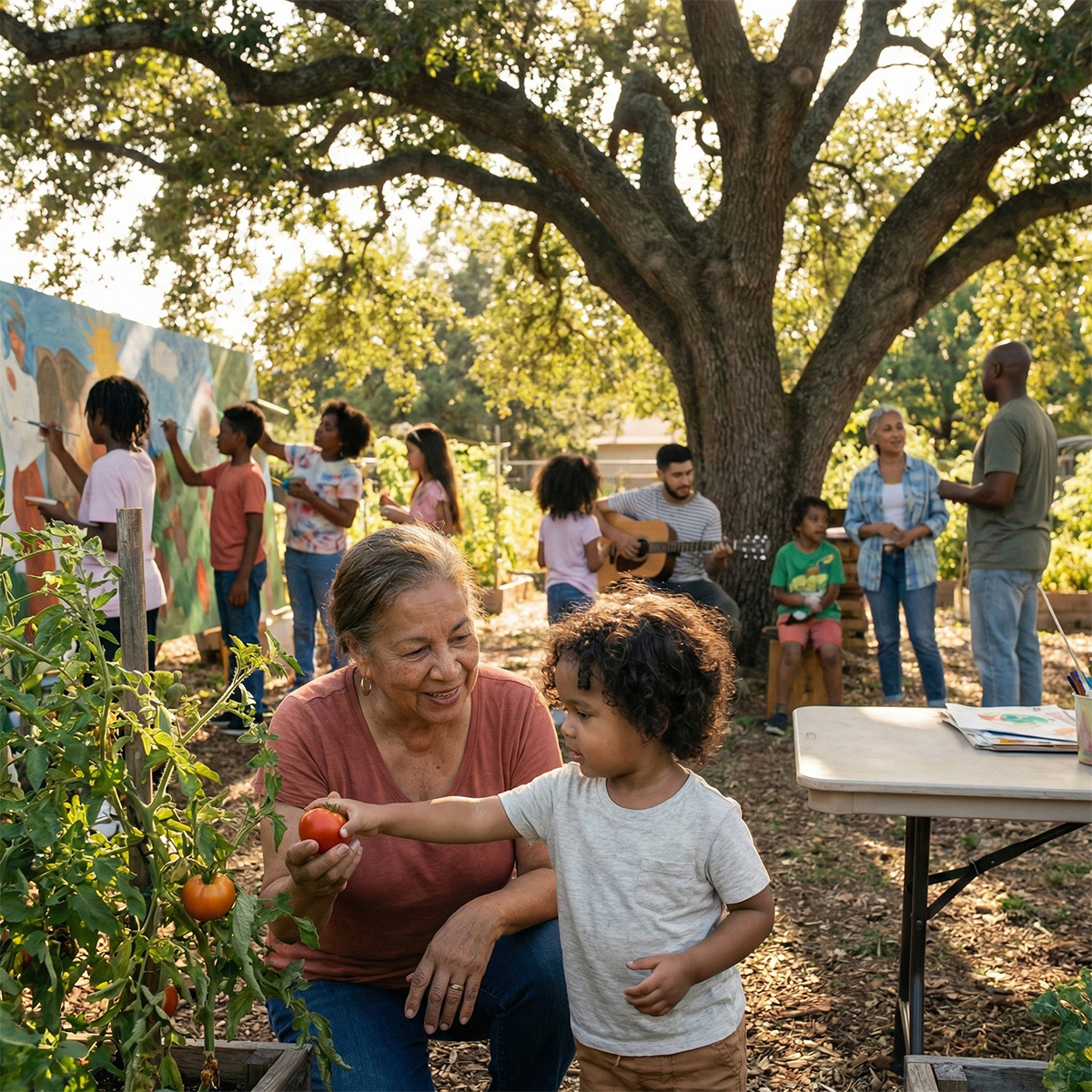
Human Capacities & Potential
The physical, emotional, cognitive, and spiritual aspects that support lifelong development and participation.
Human Capacities & Potential
This domain centres on human development across the lifespan—physical, emotional, cognitive, relational, and spiritual. It examines how people are supported to grow, express themselves, participate, and thrive. This includes the seven motivational levels that shape wellbeing from early childhood onward.
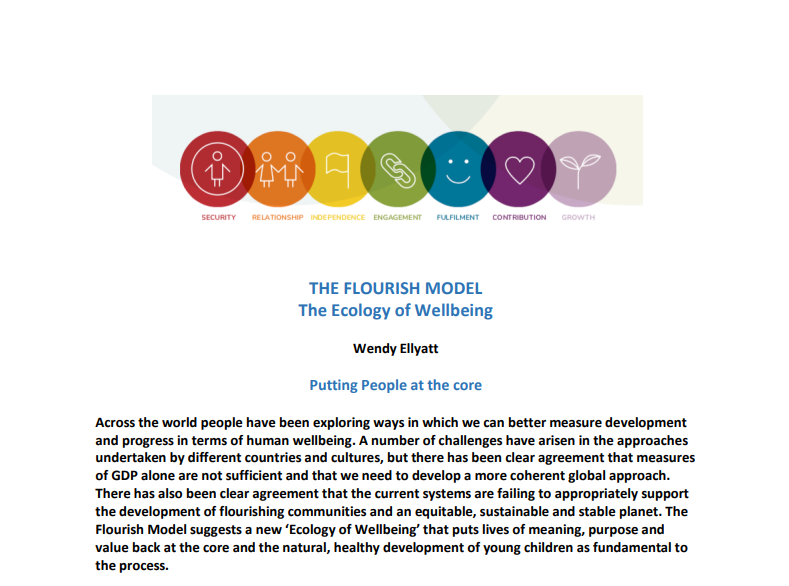
At the heart of the framework sits a developmental model of seven universal human needs that shape wellbeing across the lifespan: security, relationship, independence, engagement, fulfilment, contribution, and growth. These needs are formed most powerfully in the early years and continue to influence how individuals connect with others and the wider world throughout life.
By weaving these four domains and seven needs into a coherent whole, ESF provides a practical compass for designing policies, community initiatives, educational approaches, and economic models that nurture long term flourishing. It supports decision makers to look beyond isolated indicators and instead consider whether systems genuinely strengthen relationships, restore ecosystems, express shared values, and enable people to grow in meaningful ways.
ESF is both a framework and an invitation: to reimagine progress through a relational, developmental, and intergenerational lens, and to help create communities and institutions that support the wellbeing of all life.
Pattern Recognition
ESF encourages users to identify patterns of coherence and incoherence—within individuals, communities, and ecosystems—based on relational health, developmental stage, and value alignment.
Multi-Level Mapping
It supports reflection at multiple scales (personal, societal, ecological) and across time (including intergenerational implications).
Sensemaking Tool
By integrating insights from developmental psychology, systems theory, Indigenous wisdom, and regenerative design, it helps users interpret challenges and opportunities within a broader, life-centred worldview.
Open Resources for Change

Toward a Unitive Narrative and Worldview: an Integrative Response to the Global Meta-crisis,
Introducing the Flourish Model
The Little Book of Flourishing
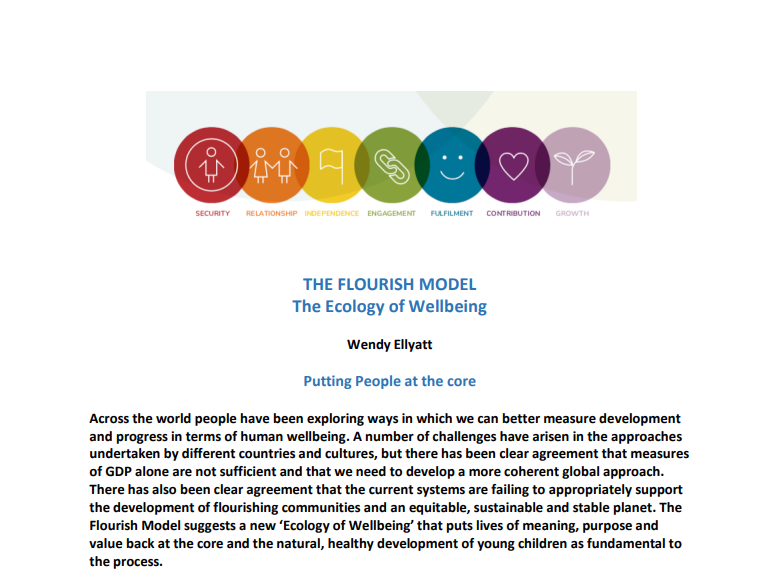
Why we need the Flourish Model: Exploring the History of Global Wellbeing indicators
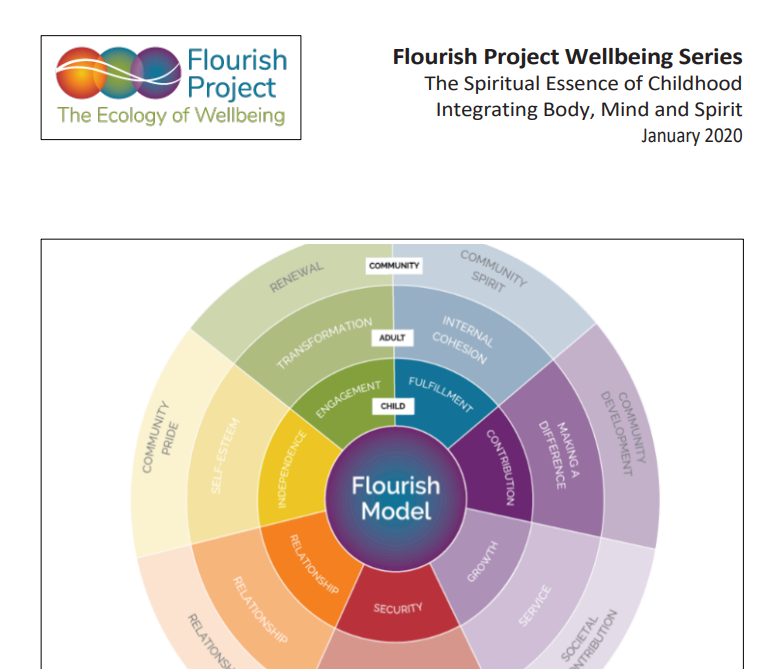
The Spiritual Essence of Childhood
The Little Book of Peace
The Little Book of Compassion
The Little Book of Education - Flourish Project
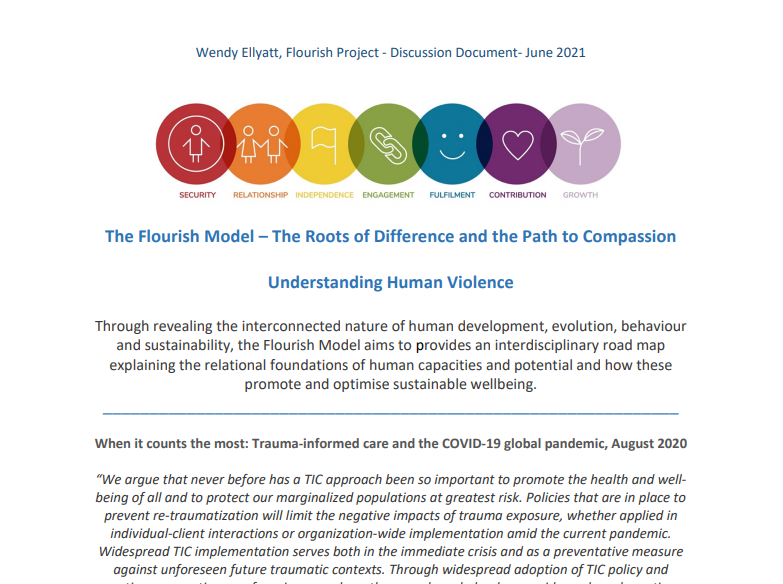
Understanding Human Violence
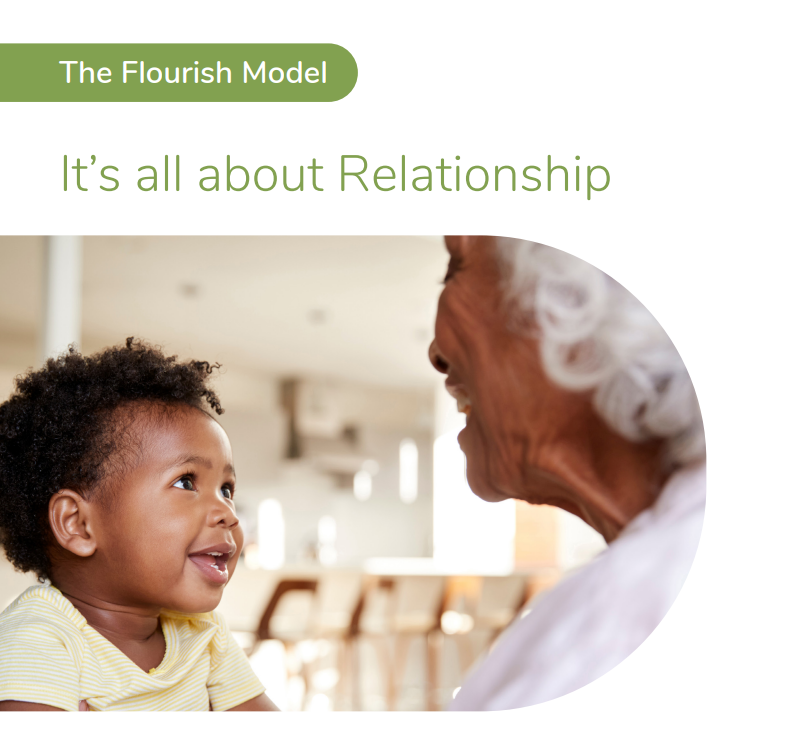
It's all about relationship
The Flourish Model: exploring the relational foundations of human capacities and potential
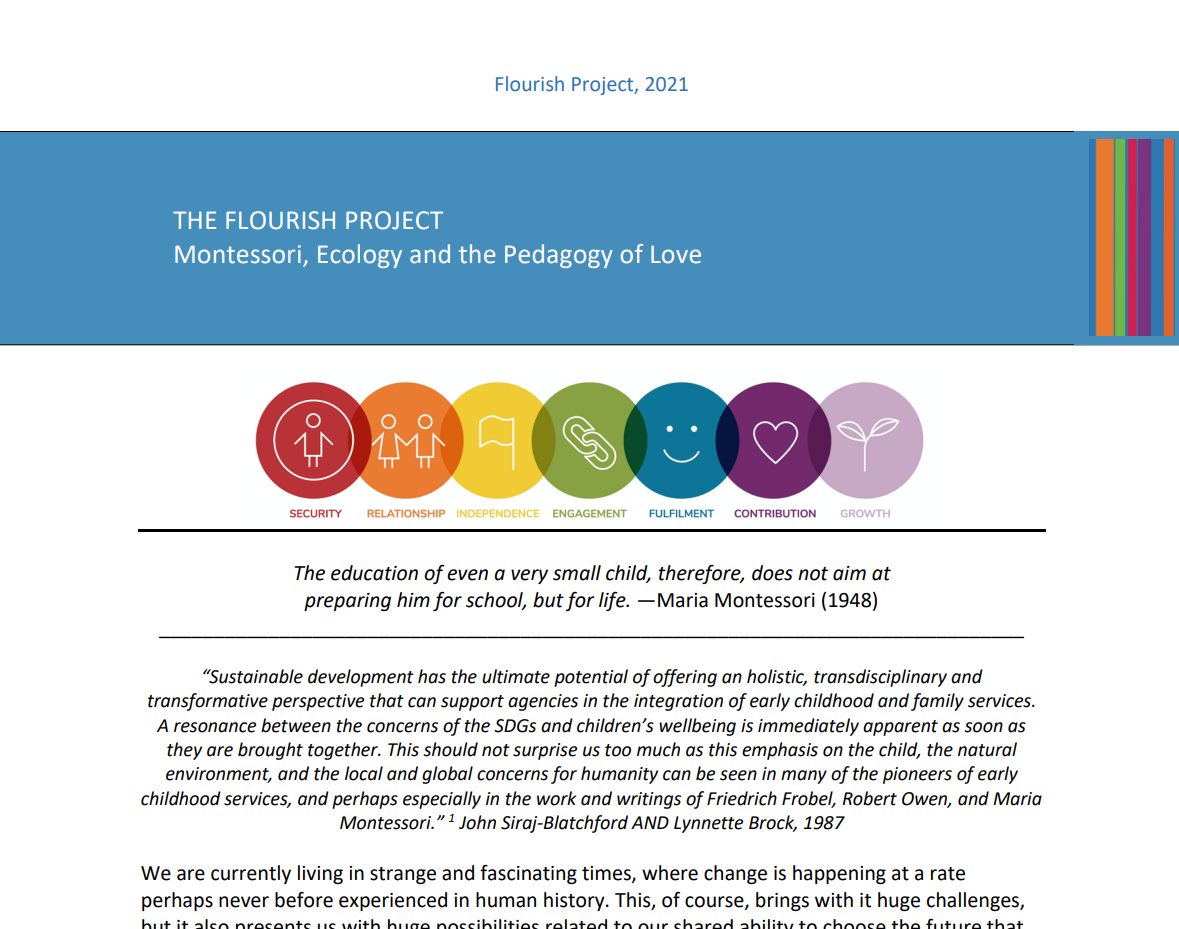
The Flourish Model, Montessori and the Pedagogy of Love
The Purpose of Education - from Attainment to Human Flourishing
Relational Intelligence: Exploring Children's Spirituality and the Pattern Language of Beauty, Flow and Love
Education for Human Flourishing - a New Conceptual Framework for Promoting Ecosystemic Wellbeing in Schools
Eco-Systemic Flourishing: Expanding the Meta Framework for 21st-Century Education
SDGs for Elementary/Primary Schools
IDGs for Elementary/Primary Schools
Short Introduction to ESF
Introducing the ESF Framework - Flourish Project, Sept 2025
SDGs Handbook for the Early Years
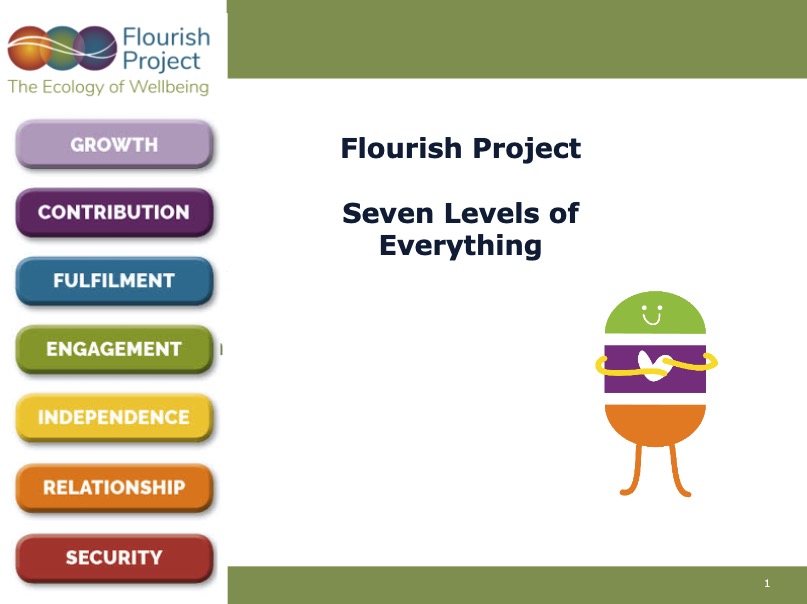
Seven Levels of Everything
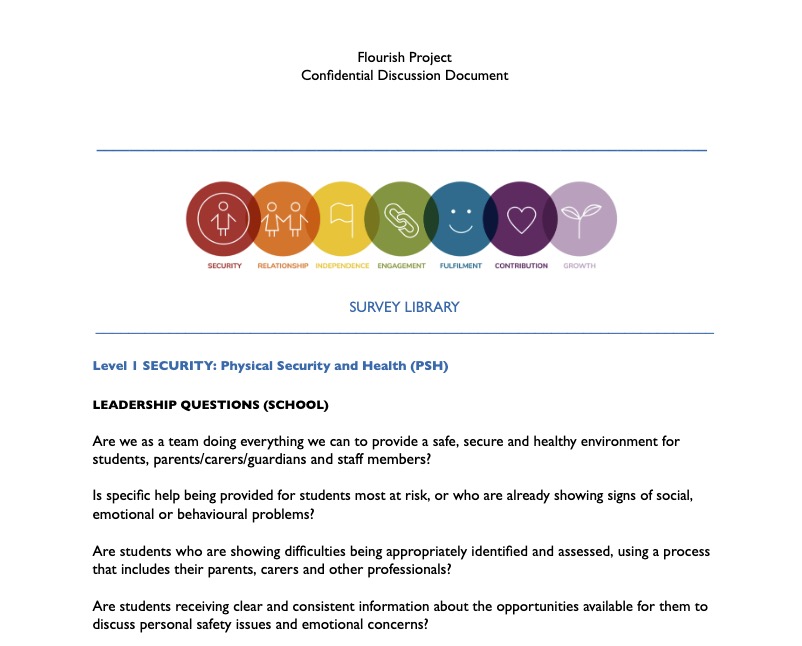
Digital Wellbeing Platform - Survey Library

The ESF Wellbeing Evaluation Grades
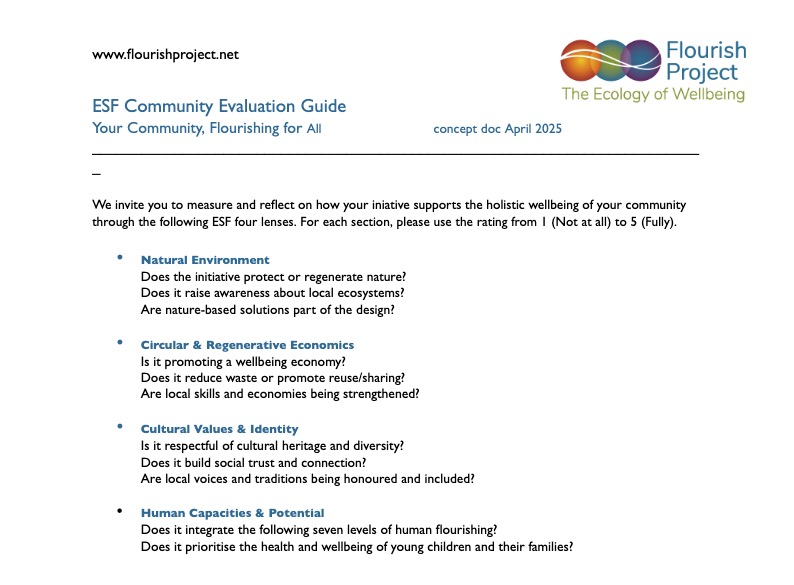
ESF Community Evaluation Guide






Seven Motivations

Security
Security
Feeling physically and emotionally safe, supported, and grounded. This includes stability, protection, and the basic conditions needed for any form of growth.

Relationship
Relationship
Experiencing trust, care, and connection with others and the natural world. This level is about belonging, empathy, communication, and forming healthy bonds.

Independence
Independence
Developing confidence, personal agency, and the ability to make choices. This includes resilience, self-worth, authenticity, and learning to navigate challenges.

Engagement
Engagement
Being curious, active, and meaningfully involved in life. This includes creativity, playfulness, problem-solving, exploration, and participating in activities that motivate and energise.

Fulfilment
Fulfilment
Finding joy, purpose, and self-expression. This level involves creativity, meaning-making, and the sense of doing what matters.

Contribution
Contribution
Feeling able to help others, give back, and make a positive difference. This includes collaboration, service, shared responsibility, and co-creating solutions.

Growth
Growth
Expanding awareness, wisdom, and potential. This level reflects openness to learning, transformation, compassion, and imagining new possibilities for oneself and the world.
Natural Environment
This domain explores how well people and places live in balance with the ecosystems that support life. It includes care for land, water, air, biodiversity, and local habitats, as well as fostering awareness of interdependence and regeneration.
Circular & Regenerative Economics
This domain looks at whether economic activity strengthens community wellbeing, reduces waste, and supports long-term resilience. It includes local livelihoods, resource circularity, sustainable industries, and economic designs that prioritise the common good. Flourishing economies give back more than they take
Cultural Values & Identity
This domain focuses on the stories, values, traditions, languages, and shared meanings that help people belong. It includes social trust, diversity, heritage, ethical life, and the ways communities make sense of the world together. Flourishing cultures nurture connection, dignity, and a shared moral horizon.
Human Capacities & Potential
This domain centres on human development across the lifespan—physical, emotional, cognitive, relational, and spiritual. It examines how people are supported to grow, express themselves, participate, and thrive. This includes the seven motivational levels that shape wellbeing from early childhood onward.

Self
The sphere of self refers to inner awareness, identity, and the lifelong development of human potential. It includes emotions, values, motivations, beliefs, and the growing capacity for agency, meaning-making, and wise action across the lifespan. Flourishing at the level of self involves the ongoing integration of needs, purpose, and experience, supported by environments that nurture wellbeing, growth, and authentic expression.
Others
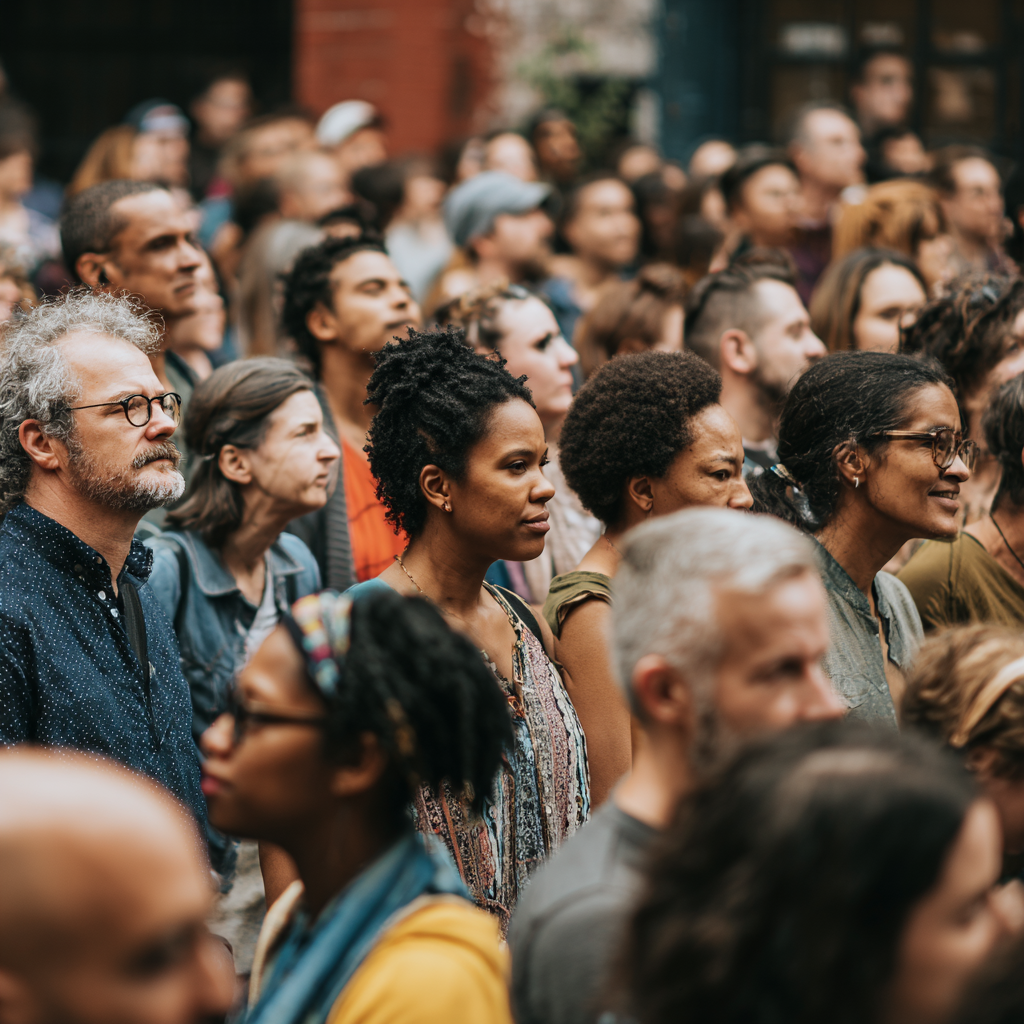
The sphere of others reflects the relationships, communities, and cultural contexts through which people develop belonging, trust, and shared meaning. This includes family, peers, community groups, and broader cultural narratives. Flourishing with others involves reciprocity, empathy, social cohesion, and participation in collective life.

Nature
The sphere of nature refers to all ecological systems that sustain life—from local habitats to planetary ecosystems. It embodies the principles of interdependence, diversity, reciprocity, and regeneration. Flourishing with nature means recognising humans as part of, not separate from, living systems, and acting in ways that restore ecological balance.

Cosmos
The sphere of cosmos reflects the wider field of meaning and existence: the spiritual, ethical, symbolic, and cosmological dimensions through which people make sense of their place in the universe. It includes worldviews, metaphysics, ritual, awe, and the felt sense of connection with something larger than the self. Flourishing in relation to the cosmos involves purpose, humility, reverence, and an expanded consciousness of interbeing.
Join our newsletter to stay up to date on features and releases
By subscribing you agree to our Privacy Policy